Demystifying Servo Drives and Motor Controllers: A Beginner's Guide
Introduction
In today's rapidly evolving ADVANCED Motion Controls industrial landscape, the integration of advanced technologies is paramount for enhancing efficiency and productivity. Among the crucial components driving this transformation are servo drives and motor controllers. These sophisticated systems play a pivotal role in powering automated machinery, ensuring precise control and seamless operation across various applications.
Understanding Servo Drives
What are Servo Drives?
Servo drives, also known as servo amplifiers or servo controllers, are electronic devices designed to control the position, velocity, and acceleration of servo motors with remarkable accuracy. These drives receive command signals from a controller or a computer and translate them into precise movements, making them indispensable in applications requiring high precision and dynamic performance.
How do Servo Drives Work?
Servo drives operate on the principle of feedback control, where sensors continuously monitor the motor's position and velocity, providing real-time feedback to the drive. This feedback loop allows the drive to adjust the motor's performance instantaneously, ensuring precise positioning and motion control. By modulating the voltage and current supplied to the motor, servo drives regulate its speed and torque, enabling smooth and accurate operation.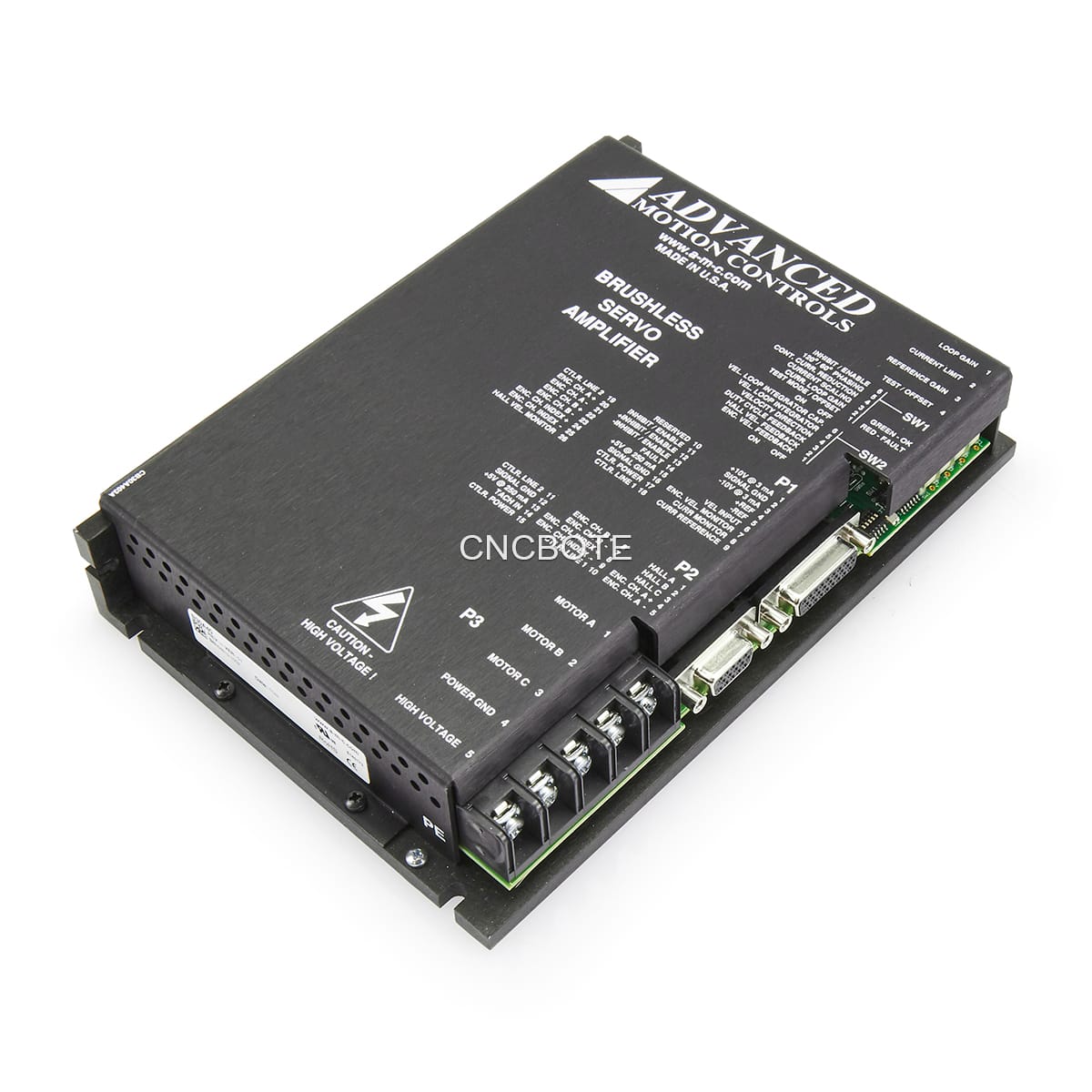
Applications of Servo Drives
Servo drives find widespread use in various industries, including manufacturing, robotics, aerospace, and automotive. From CNC machining and robotic assembly lines to 3D printing and packaging equipment, servo drives play a crucial role in enhancing productivity, quality, and flexibility in automated systems.
Exploring Motor Controllers
Motor controllers serve as the brain of electromechanical systems, Social Network orchestrating the operation of electric motors to meet specific performance requirements. These devices regulate the motor's speed, torque, and direction of rotation, enabling precise control over mechanical motion.
Definition and Functionality
A motor controller is a specialized electronic device responsible for starting, stopping, and regulating the speed and direction of an electric motor. It receives input signals from user interfaces or automated systems and converts them into appropriate commands to drive the motor accordingly. Motor controllers come in various forms, ranging from simple on-off switches to complex programmable controllers with advanced features.
Types of Motor Controllers
Motor controllers can be classified into several categories based on their control mechanisms and applications. These include: On/Off Motor Controllers Variable Speed Motor Controllers Directional Motor Controllers Programmable Motor Controllers Each type offers distinct functionalities suited for specific applications, ranging from basic home appliances to sophisticated industrial machinery.
Advantages of Motor Controllers
Motor controllers offer several advantages, including Wikipedia Here improved energy efficiency, reduced wear and tear on mechanical components, and enhanced safety through precise control and monitoring. By optimizing motor performance and minimizing wasteful energy consumption, motor controllers contribute to cost savings and environmental sustainability.
Key Differences Between Servo Drives and Motor Controllers
While servo drives and motor controllers share the common goal of regulating motor performance, they differ in terms of functionality, complexity, and applications. Servo drives excel in applications requiring high precision and dynamic control, such as robotics and CNC machining, whereas motor controllers are more suited for basic speed and direction control in simpler systems.
Importance of Servo Drives and Motor Controllers in Industrial Automation
In the realm of industrial automation, servo drives and motor controllers play a crucial role in optimizing production processes, improving product quality, and enhancing overall efficiency. By enabling precise control over mechanical motion, these components facilitate seamless integration of automated systems, leading to increased productivity and profitability for businesses.
Factors to Consider When Choosing Servo Drives and Motor Controllers
When selecting servo drives and motor controllers for a particular application, several factors must be taken into account, including:
Performance requirements
Compatibility with existing equipment
Scalability and flexibility
Cost-effectiveness
Support and maintenance
By carefully evaluating these factors and choosing the Tweet Us right components, manufacturers can maximize the performance and longevity of their automated systems.
Common Industries Utilizing Servo Drives and Motor Controllers
Servo drives and motor controllers find extensive use across various industries, including:
Manufacturing and machining
Robotics and automation
Packaging and material handling
Automotive and aerospace
Medical devices and pharmaceuticals
These components are integral to the operation of a Read our Blog wide range of equipment and machinery, driving innovation and efficiency in diverse sectors. Trends and Innovations in Servo Drives and Motor Controllers The field of servo drives and motor controllers is witnessing continuous innovation and advancement, driven by emerging technologies such as: Industry 4.0 and IoT integration Advanced motion control algorithms Energy-efficient designs Miniaturization and integration of components Enhanced connectivity and communication protocols These developments promise to further enhance the performance, reliability, and functionality of servo drives and motor controllers, paving the way for new applications and opportunities in industrial automation.
Future Outlook of Servo Drives and Motor Controllers
As technology continues to evolve, the future of servo Get us on Facebook drives and motor controllers looks promising, with advancements in artificial intelligence, machine learning, and robotics reshaping the industrial landscape. By leveraging these innovations, manufacturers can achieve higher levels of automation, productivity, and competitiveness in the global market.
Conclusion
In conclusion, servo drives and motor controllers are indispensable components in modern industrial automation, providing precise control and optimization of mechanical motion across a wide range of applications. With their ability to enhance efficiency, accuracy, and flexibility, these systems play a vital role in driving innovation and progress in manufacturing and beyond.
FAQs
What are the primary functions of servo drives and motor controllers?
Servo drives regulate the position, velocity, and acceleration of servo motors, while motor controllers control the speed, torque, and direction of electric motors.
What industries benefit the most from servo drives and motor controllers?
Industries such as manufacturing, robotics, aerospace, automotive, and medical devices rely heavily on servo drives and motor controllers for automation and precision control.
How do servo drives and motor controllers contribute to energy efficiency?
By optimizing motor performance and minimizing energy wastage, servo drives and motor controllers help reduce overall power consumption in automated systems.
What factors should businesses consider when selecting servo drives and motor controllers?
Performance requirements, compatibility, scalability, cost-effectiveness, and support services are among the key factors to consider when choosing servo drives and motor controllers.
What are some emerging trends in servo drives and motor controllers?
Trends such as Industry 4.0 integration, advanced motion control algorithms, and energy-efficient designs are shaping the future of servo drives and motor controllers, enabling smarter and more sustainable automation solutions.
Comments
Post a Comment